Sep 23, 2026
From blind boxes to talking gift boxes: where collectible gifting goes next
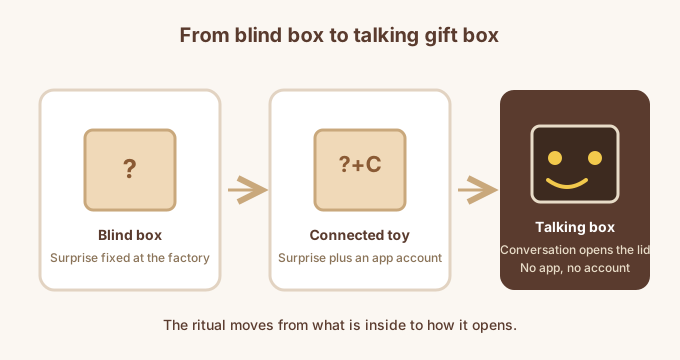
The blind box solved a specific problem: how to sell the same figure thousands of times while keeping each purchase exciting. Its answer was to fix the surprise at the factory — the buyer discovers what they got, but cannot choose it. That formula carried collectibles through a decade of growth, and it is now meeting a successor that moves the surprise one step later: into the opening itself.
Three generations of manufactured surprise
The first generation is the blind box: mystery through ignorance, identical mechanics in every unit. The second adds connectivity: the toy pairs with an app, extends into content, asks for an account. The third generation — talking gift boxes and conversational gifts — removes the account and puts the surprise back in the room: the box asks questions, the recipient answers out loud, and the lid only opens when the dialogue lands. The surprise is no longer what is inside; it is how the inside comes out.
What changes for the factory
A blind box is a casting and painting problem. A talking gift box is that plus an audio chain, a lock mechanism, a lighting state machine and a firmware release process. For collectible brands used to tooling alone, the electronics are the new competency — and the sensible path is partnering with a team that already runs the full stack, rather than assembling one from vendors.
The ritual is the new rarity
Collectible value has always come from scarcity. In conversational gifts, scarcity moves into configuration: the giver personalizes the clues and the message, which makes every unboxing technically unique. The manufacturer’s job is to protect that uniqueness — setup flows that cannot leak one gift’s configuration into another, locks that cannot be brute-forced, and a reveal that feels earned every single time.
What we tell collectible brands
Start from the reveal, not the feature list. Script the whole ritual — handover, arming, dialogue, unlock — as a fixed sequence, then buy exactly the hardware that sequence needs. The brands that treat the electronics as stage machinery for one scripted moment ship products that photograph well, demo well on the shelf, and get re-gifted instead of returned.